IS it just me getting older, or does the present really move more and more rapidly into history?
The Labour Party had not yet chosen its future direction before the shelves were groaning with self-justifying tomes laying bare the inner secrets of the New Labour Project.
Let’s hope we don’t have to wait long for the present government to be history.
For the publication of the diaries that will reveal the rivalries, hatreds and failures at its core.
When that happens, surely the most interesting will be those of Vince Cable.
It will be fascinating to learn how a man whose speeches and public statements are mostly so sound can reconcile himself to a role in such a radical government. One with principles and ideals so radically unlike his own.
How a man who rightly speaks out against “short-term investors looking for a speculative killing”, who rightly condemns big bankers’ bonuses, can bring himself to serve in a government committed to punishing ordinary people for the bankers’ sins.
He will say that as business secretary he is in a position to counter the rigging of markets, to battle for the rights and survival of small businesses against the aggression of the corporate big beasts.
He may nod in agreement with one carefully anonymous “senior Lib Dem” who said this week: “Capitalism left to its own devices just creates monopolies which work against the interests of consumers and inflict severe damage on the wider economy.”
And he may say he’s in his job to try to ensure capitalism isn’t left to its own devices.
But the bottom line is that by being in coalition with the Tories, he and his party are enabling the swinging of the Tory axe.
The rapid and savage dismantling of the state education system.
The demolition of local government as a provider of vital services.
The giving away of the family silver – to use Harold Macmillan’s resonant phrase – to the very capitalists Cable would like to control.
As if cash-driven private enterprise were somehow more controllable than the employees of a democratically elected council.
We’ve heard a lot since May, and we’ve heard it a lot this conference week, that the LibDems had “no alternative” to joining the coalition.
Poppycock.
Of course they had a choice. They still have one.
I can understand that they might not have wanted to prop up the ailing remnants of a Gordon Brown government.
It would certainly have been a difficult act to pull off. And I can understand that some among the Labour leadership itself had no desire for a Lib-Lab pact.
For Labour, in fact, a (hopefully short) period in opposition to purge themselves and pick a new leader was probably the best course open.
For the LibDems the proper, most honourable, thing to do would have been to tell Cameron and his crew: “Fine. Form a minority government. Just don’t count on our support to push through cuts or measures we don’t approve of.”
Sadly, it seems the allure of power – even partial, largely illusory power – proved stronger.
Another thing we heard a lot was the argument that “the markets” demanded strong government.
So when did “the markets” – i.e. unfettered capitalism – take precedence in a supposed democracy over the electorate?
Most of whom didn’t vote for a neo-Thatcherite asset-stripping of the nation.
Nick Clegg I think I understand. He is Cameron-lite, a natural ally of a similarly tailored public-school chum. I’m sure he feels right at home playing governments.
Cable’s involvement is harder to fathom.
Which is why, self-justifying and probably smug as they will no doubt be, his diaries or memoirs will surely cast light on the whole present grubby business.
I just hope he’s in a position to release them soon.
****
LABOUR will announce tomorrow the name of its new leader. Hopefully, the next prime minister.
Boy, do I hope the party in its collective wisdom has made the right choice.
I hope it’s Ed Miliband. I think.
It’s a flaw in democracy that you can never tell quite what a leader will be like in power until you’ve put them there. For now we can only judge on what we’ve seen or heard so far.
David Miliband, on the face of it, might be the man most likely to lure voters away from the ConDem experiment. But do we really want Blair II?
Brother Ed is certainly not the left-winger the shallow media would have you believe. But he might be the best available compromise between sound principles and electability.
****
THE blackberries were a little late this year, but we’ve certainly got a fine crop now.
The most striking thing about this autumn so far, though, has been the amazing proliferation of wild fungi.
My field guide tells me parasol mushrooms are uncommon. Not round here, they’re not. Not right now. They’ve even sprung up on the verge in Tuddenham Road.
I’ve never seen so many. And I’ve never tasted better.
Just make sure, if you’re thinking of enjoying this bounty of nature, that you know exactly what you’re picking. It can be the difference between a good meal and a bad death.
Friday, 24 September 2010


Friday, 17 September 2010
Bulldog spirit – history’s unlearned lesson
IT’S often remarked that the very existence of the state of Israel is down to Hitler.
It’s not actually true, or at least it’s not the whole of the story.
Zionism – the Jewish movement for a homeland in Palestine – dates back to the Russian pogroms of the 1880s.
The Balfour Declaration, in which the British government promised (as if it was up to them) “a national home for the Jewish people” in Palestine, was made in 1917.
Whichever way you look at it, though, there is some truth in the idea that the survival of a distinct Jewish identity – and the existence of Israel – is largely due to anti-Semitism.
If it hadn’t been for anti-Jewish laws and ghettoes, the Jews would have been assimilated into the wider European culture long ago. Or so the theory goes, and I mostly believe it.
But this column isn’t really about Israel or the Jews. It’s about siege mentality and how it forges unity and community.
If Hitler thought that by bombing London and other British cities night after night he could destroy British morale, he could hardly have been more wrong. Shared peril brought the people together.
Interestingly, German survivors of the Allied bombing of Berlin say much the same thing – even though Berlin suffered far heavier destruction than London did.
(Hamburg and Dresden fared even worse, with more deaths in just two raids in 1943 and 1945 than in all the attacks on Britain put together.)
Like Warsaw before it, and other cities across Europe later, London in 1940 became a place where air-raids, flattened buildings, bomb-craters, broken glass, rubble and fire were commonplace.
My parents married in 1944 in a landmark London church that had been firebombed just days earlier. The roof was open to the sky and cinders from its remains tinkled down on the wedding party as they exchanged their vows.
It’s a romantic image I was raised with.
Other familiar anecdotes are either comic or tell of miraculous escapes. Or both.
Like the woman found unharmed in her bath, supported precariously in mid-air by the surviving sturdy plumbing in her bombed home.
Or the man located in the rubble by the sound of his laughter: “I pulled the chain and the house fell down!”
Those are the tales my father told, not any of the ghastlier things he must surely have witnessed as a London fireman.
All contribute to the same picture – the common one of never-say-die spirit. The “British bulldog” attitude that was no doubt part-propaganda, but part reality – and which still forms part of the way we think of ourselves.
The blitzed or besieged city is, almost inevitably, a “hero city”. And there are starker examples of that than London.
No one in London, as far as I’m aware, froze to death trying to find precious water.
Or boiled leather boots and book-covers for food.
Or stripped paper from the walls to eat the glue.
Or ate the starved corpses of neighbours or family, after all the birds, rats and pets had gone.
All of those horrors were part of life in besieged Leningrad between September 1941 and January ’44.
Leningrad, where 15 times as many civilians died as in the whole of Britain – not to mention 1.5million Russian soldiers – was the hero city to end all hero cities.
The theory is that what doesn’t kill you makes you stronger, and in a sense I’m sure it’s true.
Ireland would surely not still be such a strongly Catholic land had it not endured centuries of anti-Catholic oppression by England.
The war in Iraq, supposedly integral to the “war on terror”, has made Al-Qaeda strong in a country where it barely existed before.
And the ghetto-isation of Palestinian Arabs is Israel’s worst and most abiding mistake. As if the Jews – at least that tiny proportion of Jews who constitute Israel’s establishment – had learned nothing from their own grim history.
****
I HAD to check the calendar to make sure I hadn’t over-slept severely and woken up on April 1.
Did the news really say Tony Blair had been awarded a medal for “conflict resolution”?
Surely not the same Tony Blair who only last week was ducking out of book signings in fear of a few anti-war protestors? Yet who refused to duck out of starting an actual war despite the protests of millions?
The same Tony Blair who aided and abetted America’s shabbiest president in invading a foreign country on a false pretext, causing upwards of 100,000 deaths, destabilising the Middle East, increasing radicalism around the world and with it the risk of terrorism?
A man so monstrously self-centred that in his new book he explains his decision with the words: “To me, the only meaning was in being true to myself.”
As if he hadn’t been elected to represent the rest of us.
A medal for a man many would like to see facing a war-crimes trial?
The award of last year’s Liberty Medal to a Hollywood movie-maker was odd enough. But if I were Steven Spielberg I’d be thinking now of giving my own gong back.
It’s not actually true, or at least it’s not the whole of the story.
Zionism – the Jewish movement for a homeland in Palestine – dates back to the Russian pogroms of the 1880s.
The Balfour Declaration, in which the British government promised (as if it was up to them) “a national home for the Jewish people” in Palestine, was made in 1917.
Whichever way you look at it, though, there is some truth in the idea that the survival of a distinct Jewish identity – and the existence of Israel – is largely due to anti-Semitism.
If it hadn’t been for anti-Jewish laws and ghettoes, the Jews would have been assimilated into the wider European culture long ago. Or so the theory goes, and I mostly believe it.
But this column isn’t really about Israel or the Jews. It’s about siege mentality and how it forges unity and community.
If Hitler thought that by bombing London and other British cities night after night he could destroy British morale, he could hardly have been more wrong. Shared peril brought the people together.
Interestingly, German survivors of the Allied bombing of Berlin say much the same thing – even though Berlin suffered far heavier destruction than London did.
(Hamburg and Dresden fared even worse, with more deaths in just two raids in 1943 and 1945 than in all the attacks on Britain put together.)
Like Warsaw before it, and other cities across Europe later, London in 1940 became a place where air-raids, flattened buildings, bomb-craters, broken glass, rubble and fire were commonplace.
My parents married in 1944 in a landmark London church that had been firebombed just days earlier. The roof was open to the sky and cinders from its remains tinkled down on the wedding party as they exchanged their vows.
It’s a romantic image I was raised with.
Other familiar anecdotes are either comic or tell of miraculous escapes. Or both.
Like the woman found unharmed in her bath, supported precariously in mid-air by the surviving sturdy plumbing in her bombed home.
Or the man located in the rubble by the sound of his laughter: “I pulled the chain and the house fell down!”
Those are the tales my father told, not any of the ghastlier things he must surely have witnessed as a London fireman.
All contribute to the same picture – the common one of never-say-die spirit. The “British bulldog” attitude that was no doubt part-propaganda, but part reality – and which still forms part of the way we think of ourselves.
The blitzed or besieged city is, almost inevitably, a “hero city”. And there are starker examples of that than London.
No one in London, as far as I’m aware, froze to death trying to find precious water.
Or boiled leather boots and book-covers for food.
Or stripped paper from the walls to eat the glue.
Or ate the starved corpses of neighbours or family, after all the birds, rats and pets had gone.
All of those horrors were part of life in besieged Leningrad between September 1941 and January ’44.
Leningrad, where 15 times as many civilians died as in the whole of Britain – not to mention 1.5million Russian soldiers – was the hero city to end all hero cities.
The theory is that what doesn’t kill you makes you stronger, and in a sense I’m sure it’s true.
Ireland would surely not still be such a strongly Catholic land had it not endured centuries of anti-Catholic oppression by England.
The war in Iraq, supposedly integral to the “war on terror”, has made Al-Qaeda strong in a country where it barely existed before.
And the ghetto-isation of Palestinian Arabs is Israel’s worst and most abiding mistake. As if the Jews – at least that tiny proportion of Jews who constitute Israel’s establishment – had learned nothing from their own grim history.
****
I HAD to check the calendar to make sure I hadn’t over-slept severely and woken up on April 1.
Did the news really say Tony Blair had been awarded a medal for “conflict resolution”?
Surely not the same Tony Blair who only last week was ducking out of book signings in fear of a few anti-war protestors? Yet who refused to duck out of starting an actual war despite the protests of millions?
The same Tony Blair who aided and abetted America’s shabbiest president in invading a foreign country on a false pretext, causing upwards of 100,000 deaths, destabilising the Middle East, increasing radicalism around the world and with it the risk of terrorism?
A man so monstrously self-centred that in his new book he explains his decision with the words: “To me, the only meaning was in being true to myself.”
As if he hadn’t been elected to represent the rest of us.
A medal for a man many would like to see facing a war-crimes trial?
The award of last year’s Liberty Medal to a Hollywood movie-maker was odd enough. But if I were Steven Spielberg I’d be thinking now of giving my own gong back.
Friday, 10 September 2010
Free schools? It's all the others that have to pay
I’M pleased for Clare that it should get a new high school when the middle school closes in 2013.
I hope the proposed Stour Valley Community School turns out to be a good school. There seems to be no reason it won’t be.
As with any school, a lot will depend on the appointment of a good head. Perhaps even more in this case, since they’ll be starting from scratch with the recruitment of an entire staff.
I wish them well.
I wish more that the middle school – whose buildings the new establishment aims to take over – had not been placed under the axe.
Given, though, that Suffolk is unhappily set on scrapping the three-tier schools system, I understand people in Clare wanting to keep post-11 schooling in the town.
The Clare proposal was the only one in Suffolk among the 16 new “free schools” announced with a fanfare this week by education secretary Michael Gove.
Sixteen. Hardly seems worth all the fuss, does it?
Hardly worth the great noise with which the Tories trumpeted “free schools” as their Big Idea.
Or the unseemly haste with which the ConDem government rushed to get their changes under way.
Most of all, not worth the callous scrapping of the Building Schools for the Future project.
Sixteen new “free schools” isn’t much compensation for the 715 school revamps Gove hurried to cancel, leaving pupils and staff throughout the country in dilapidated premises that had been due for rebuilding.
I don’t suppose the privately-educated Gove knows much about life in collapsing comprehensives. Or cares.
The venue he chose to announce the brave 16 was Westminster Academy in west London. It is a comprehensive, but hardly a typical one.
Founded only in 2006, it moved in 2007 into a new “state-of-the-art” building. How some of our shabbier schools – especially those slung up in the 1960s – could use some of the tens of millions spent on it.
But that, of course, is part of the point of the academies – both those established under Tony Blair’s mis-government and those to come under Gove and co.
David Hudson, a headteacher in Rotherham, put the case against academies very well this week.
He said: “If we were to become an academy, it would in essence take money and resources from all the other Rotherham schools and schools across the nation and simply give it to us.
“I am head of an outstanding, high-performing school. I’m already doing very nicely, thank you very much, so why give me extra money at the expense of other schools that need it?”
Good on him – and on all those other heads of outstanding schools, including Farlingaye High in Woodbridge, that have taken the same principled stand.
Support for both the “free schools” and academies came this week from an interesting source.
The Confederation of British Industry (sometimes referred to as the bosses’ union) wants the “free schools” programme extended to allow profit-making companies to join.
The CBI predictably talks about “value for money”, then adds: “Government must open up services to competition and in the case of free schools, allow profit-making companies to be involved.”
Which sounds to me like what it was really about all along – what privatisation is always about.
Never mind the quality, feel the profit.
****
TWO things shocked me among all the sordid tale of Wayne Rooney’s extra-marital shenanigans.
The world, we are told, is awash with young women eager to give their bodies to famous footballers. Yet here is Wazza, probably the most famous of the lot right now, feeling he has to pay for sex.
Shock two is worse.
It wasn’t the revelation that he paid £200 for a packet of 20 Marlboro. Hell, what’s £200 to a man paid a reputed £120,000 a week?
But what on earth is a bloke who gets that sort of dosh to keep himself fit doing buying cigs at any price?
****
“I WAS running down the middle of the road where there wasn’t quite so much broken glass, and a man came running from a side street and joined me.
“We were running side-by-side towards the fire, which I thought might be my home. I said: ‘Good evening.’ And he said: ‘Good evening.’
“Then he said: ‘I just came out of my house and it fell down around me.’
“ ‘Oh, I am so sorry,’ said I. ‘Oh well, goodbye’ – because our ways parted again. It was just as matter-of-fact as that.”
The words are those of my mother, then resident in London. And of course she was recalling the Blitz – which, as you may have noticed, began 70 years ago this week.
If nothing else, that one episode reveals how far Hitler failed in his aim to destroy British morale.
In fact, all these decades later, the “Blitz spirit” is still very much part of how we define our Britishness.
And I’ll be sharing more thoughts on that in this column next week.
I hope the proposed Stour Valley Community School turns out to be a good school. There seems to be no reason it won’t be.
As with any school, a lot will depend on the appointment of a good head. Perhaps even more in this case, since they’ll be starting from scratch with the recruitment of an entire staff.
I wish them well.
I wish more that the middle school – whose buildings the new establishment aims to take over – had not been placed under the axe.
Given, though, that Suffolk is unhappily set on scrapping the three-tier schools system, I understand people in Clare wanting to keep post-11 schooling in the town.
The Clare proposal was the only one in Suffolk among the 16 new “free schools” announced with a fanfare this week by education secretary Michael Gove.
Sixteen. Hardly seems worth all the fuss, does it?
Hardly worth the great noise with which the Tories trumpeted “free schools” as their Big Idea.
Or the unseemly haste with which the ConDem government rushed to get their changes under way.
Most of all, not worth the callous scrapping of the Building Schools for the Future project.
Sixteen new “free schools” isn’t much compensation for the 715 school revamps Gove hurried to cancel, leaving pupils and staff throughout the country in dilapidated premises that had been due for rebuilding.
I don’t suppose the privately-educated Gove knows much about life in collapsing comprehensives. Or cares.
The venue he chose to announce the brave 16 was Westminster Academy in west London. It is a comprehensive, but hardly a typical one.
Founded only in 2006, it moved in 2007 into a new “state-of-the-art” building. How some of our shabbier schools – especially those slung up in the 1960s – could use some of the tens of millions spent on it.
But that, of course, is part of the point of the academies – both those established under Tony Blair’s mis-government and those to come under Gove and co.
David Hudson, a headteacher in Rotherham, put the case against academies very well this week.
He said: “If we were to become an academy, it would in essence take money and resources from all the other Rotherham schools and schools across the nation and simply give it to us.
“I am head of an outstanding, high-performing school. I’m already doing very nicely, thank you very much, so why give me extra money at the expense of other schools that need it?”
Good on him – and on all those other heads of outstanding schools, including Farlingaye High in Woodbridge, that have taken the same principled stand.
Support for both the “free schools” and academies came this week from an interesting source.
The Confederation of British Industry (sometimes referred to as the bosses’ union) wants the “free schools” programme extended to allow profit-making companies to join.
The CBI predictably talks about “value for money”, then adds: “Government must open up services to competition and in the case of free schools, allow profit-making companies to be involved.”
Which sounds to me like what it was really about all along – what privatisation is always about.
Never mind the quality, feel the profit.
****
TWO things shocked me among all the sordid tale of Wayne Rooney’s extra-marital shenanigans.
The world, we are told, is awash with young women eager to give their bodies to famous footballers. Yet here is Wazza, probably the most famous of the lot right now, feeling he has to pay for sex.
Shock two is worse.
It wasn’t the revelation that he paid £200 for a packet of 20 Marlboro. Hell, what’s £200 to a man paid a reputed £120,000 a week?
But what on earth is a bloke who gets that sort of dosh to keep himself fit doing buying cigs at any price?
****
“I WAS running down the middle of the road where there wasn’t quite so much broken glass, and a man came running from a side street and joined me.
“We were running side-by-side towards the fire, which I thought might be my home. I said: ‘Good evening.’ And he said: ‘Good evening.’
“Then he said: ‘I just came out of my house and it fell down around me.’
“ ‘Oh, I am so sorry,’ said I. ‘Oh well, goodbye’ – because our ways parted again. It was just as matter-of-fact as that.”
The words are those of my mother, then resident in London. And of course she was recalling the Blitz – which, as you may have noticed, began 70 years ago this week.
If nothing else, that one episode reveals how far Hitler failed in his aim to destroy British morale.
In fact, all these decades later, the “Blitz spirit” is still very much part of how we define our Britishness.
And I’ll be sharing more thoughts on that in this column next week.
Saturday, 4 September 2010
Handkerchief, magnet and spanner
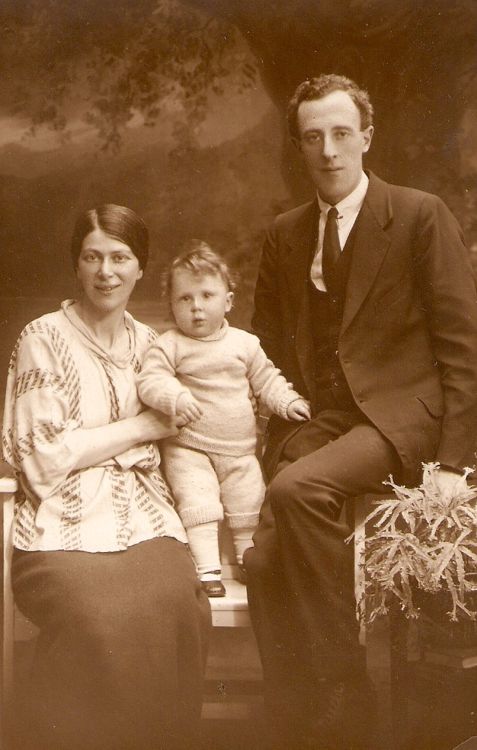
I NEVER knew my grandfather. Like so many, I was deprived of that privilege by Hitler.
And arguably, in my particular case, by the rigidity of the Royal Navy and obtuseness of one medical officer.
 There were special circumstances. Perhaps, when one looks at individual cases, circumstances are always special.
Growing up, I was only dimly aware my grandfather had ever existed. Now, through that curious way things have of trickling down through families, I have hundreds of photos he took, dating back to 1912.
No doubt it is from him, via my father, that I inherited my fascination with photography.
As a child I knew the photos, not by him but of him, that hung on my grandmother’s walls.
The one of him probably about 30, already a little gaunt, in naval uniform. The other elderly, grey-haired, in the vegetable garden behind their little terraced house in London.
Elderly? He was two years younger when he died than I am now.
But that was already a lot older than most of the men who were sent to war.
Clive Semmens was 50, and newly toothless, when he was called up in 1939.
This I have learned only now, through acquiring a handful of old pocket diaries – his and my grandmother’s.
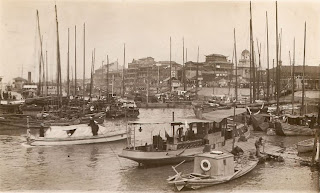 Mostly they record only such mundane things as meetings, lists of letters sent and received, rent paid, vegetables planted.
In his case there are also times of sailings – “Weighed anchor Gibraltar 10.30” or “Anchored Shanghai 5.10a.m.”
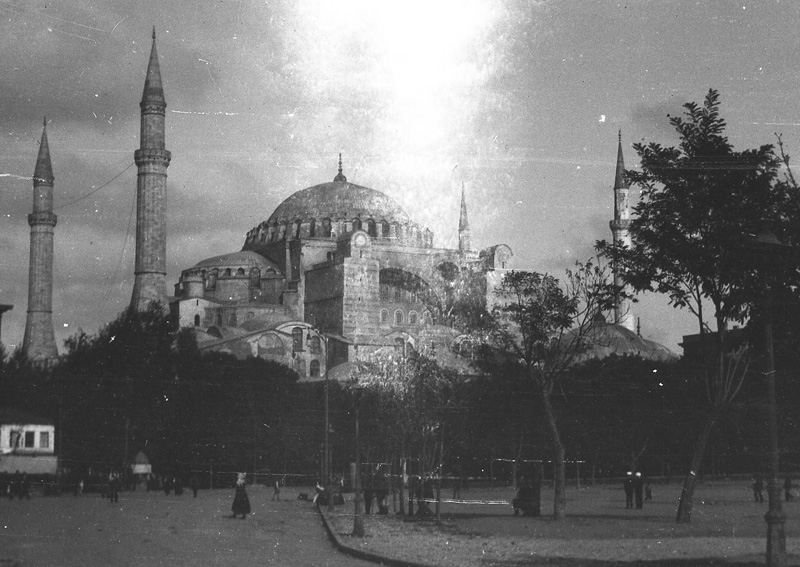
One day in 1926 he notes: “Tried to get to Stamboul.”
The following day he records: “Got to Stamboul.” There is no note of what he made of the place (now known as Istanbul), though I have a dozen photos he took there (including the one below) – as I have of Gibraltar, Shanghai and many other exotic places.
It was in 1905, as a 16-year-old, that he followed his two elder brothers into the Navy.
 Though he never conquered his sea-sickness, and always refused his rum ration, he remained in service up to 1929 in the engine-room of successive vessels.
But it is my grandmother’s diaries for 1939 and 1940 that have shed a new and poignant ray of light.
“Saturday, August 19, 1939: Clive’s holidays started.
“Tuesday 22: Went by car to Rustington. Picked some sloes and blackberries on the way. Lovely weather.

“Wednesday 23: Clive received a telegram recalling him to barracks owing to international situation. Has to rejoin by noon tomorrow. Clive had the last tooth out.
"Thursday 24: Clive left home 8am to join the barracks. With his mouth still bleeding and not a tooth in his mouth he is passed as dentally fit and sent to a destroyer the same night!”
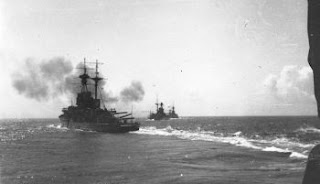
It was ten years since he had completed 24 years in the Navy, including active service throughout the First World War (pic below). Now, after a decade in civvy street as a radio engineer, he was back below decks as a “naval pensioner under 55”.
For the first few months of war he was on almost constant patrol in the Channel, escorting troop ships and clearing mines.
By an odd chance, he was home on his first leave at the time of the Dunkirk evacuation. The diary for these days includes more mundane detail than at almost any other time.
“Thursday, May 16, 1940: Clive’s leave started at noon; left Chatham 1.30pm, arrived home, after shopping in Greenford, about 4.30.
“Friday 17: Clive planted two rows haricot beans, one blackcurrant, 12 celery plants. Went to do shopping in the car.
“Sunday 19: Windy, warm, sunshine all day. Planted out one marrow, four cucumbers. Clive worked all day in the garden.
“Tuesday 21: Bright, sunny but windy. Went for a ride to Burnham beeches in the afternoon, had picnic tea there.
“Monday 27: Helped Clive to earth up the air raid shelter.
“Tuesday 28: Spent a few hours in the garden with Clive. Last day of his leave. Position very serious.
“Wednesday 29: Clive went back to his ship. I went to the station with him. Fine at first, clouds gathering in the afternoon. Late in the afternoon thunderstorm. Washed, dried and ironed.
“Friday June 7: Letter from Clive. Posted one to him.
“Sunday 9: Heaviest thunderstorm of the season. First of own strawberries for dinner. After the rain air raid shelter has several inches of water.
“Monday 10: Baled water out of the air raid shelter, hoed the onions.”
Added later in different ink: “Clive’s ship bombed off Le Havre, two bombs explode in the Engine Room. Clive injured.
“Tuesday 11: 8.30p.m. Telegram informing of Clive having been injured on war service.
“Wednesday 12: 4.15p.m received telegram informing of his having been admitted to Haslar Royal Naval Hospital, Gosport, seriously ill with injuries. Left at once for Gosport, arrived there about 9pm and told he is dead.
“Saturday 15: Clive buried at Gosport Naval Hospital at 11am with Naval Honours. Dorothy and Jim came, by car. Sis and Percy arrived just in time for the funeral. From a talk with the lieutenant of his ship I found Clive was conscious after the explosion.
“Wednesday, August 7: Received from Haslar Hospital Clive’s last-minute things – dentures, matches, cigarettes, handkerchief, magnet and spanner.”
And arguably, in my particular case, by the rigidity of the Royal Navy and obtuseness of one medical officer.
 There were special circumstances. Perhaps, when one looks at individual cases, circumstances are always special.
Growing up, I was only dimly aware my grandfather had ever existed. Now, through that curious way things have of trickling down through families, I have hundreds of photos he took, dating back to 1912.
No doubt it is from him, via my father, that I inherited my fascination with photography.
As a child I knew the photos, not by him but of him, that hung on my grandmother’s walls.
The one of him probably about 30, already a little gaunt, in naval uniform. The other elderly, grey-haired, in the vegetable garden behind their little terraced house in London.
Elderly? He was two years younger when he died than I am now.
But that was already a lot older than most of the men who were sent to war.
Clive Semmens was 50, and newly toothless, when he was called up in 1939.
This I have learned only now, through acquiring a handful of old pocket diaries – his and my grandmother’s.
 Mostly they record only such mundane things as meetings, lists of letters sent and received, rent paid, vegetables planted.
In his case there are also times of sailings – “Weighed anchor Gibraltar 10.30” or “Anchored Shanghai 5.10a.m.”
One day in 1926 he notes: “Tried to get to Stamboul.”
The following day he records: “Got to Stamboul.” There is no note of what he made of the place (now known as Istanbul), though I have a dozen photos he took there (including the one below) – as I have of Gibraltar, Shanghai and many other exotic places.
It was in 1905, as a 16-year-old, that he followed his two elder brothers into the Navy.
 Though he never conquered his sea-sickness, and always refused his rum ration, he remained in service up to 1929 in the engine-room of successive vessels.
But it is my grandmother’s diaries for 1939 and 1940 that have shed a new and poignant ray of light.
“Saturday, August 19, 1939: Clive’s holidays started.
“Tuesday 22: Went by car to Rustington. Picked some sloes and blackberries on the way. Lovely weather.

“Wednesday 23: Clive received a telegram recalling him to barracks owing to international situation. Has to rejoin by noon tomorrow. Clive had the last tooth out.
"Thursday 24: Clive left home 8am to join the barracks. With his mouth still bleeding and not a tooth in his mouth he is passed as dentally fit and sent to a destroyer the same night!”
It was ten years since he had completed 24 years in the Navy, including active service throughout the First World War (pic below). Now, after a decade in civvy street as a radio engineer, he was back below decks as a “naval pensioner under 55”.
For the first few months of war he was on almost constant patrol in the Channel, escorting troop ships and clearing mines.
By an odd chance, he was home on his first leave at the time of the Dunkirk evacuation. The diary for these days includes more mundane detail than at almost any other time.

“Thursday, May 16, 1940: Clive’s leave started at noon; left Chatham 1.30pm, arrived home, after shopping in Greenford, about 4.30.
“Friday 17: Clive planted two rows haricot beans, one blackcurrant, 12 celery plants. Went to do shopping in the car.
“Sunday 19: Windy, warm, sunshine all day. Planted out one marrow, four cucumbers. Clive worked all day in the garden.
“Tuesday 21: Bright, sunny but windy. Went for a ride to Burnham beeches in the afternoon, had picnic tea there.
“Monday 27: Helped Clive to earth up the air raid shelter.
“Tuesday 28: Spent a few hours in the garden with Clive. Last day of his leave. Position very serious.
“Wednesday 29: Clive went back to his ship. I went to the station with him. Fine at first, clouds gathering in the afternoon. Late in the afternoon thunderstorm. Washed, dried and ironed.
“Friday June 7: Letter from Clive. Posted one to him.
“Sunday 9: Heaviest thunderstorm of the season. First of own strawberries for dinner. After the rain air raid shelter has several inches of water.
“Monday 10: Baled water out of the air raid shelter, hoed the onions.”
Added later in different ink: “Clive’s ship bombed off Le Havre, two bombs explode in the Engine Room. Clive injured.
“Tuesday 11: 8.30p.m. Telegram informing of Clive having been injured on war service.
“Wednesday 12: 4.15p.m received telegram informing of his having been admitted to Haslar Royal Naval Hospital, Gosport, seriously ill with injuries. Left at once for Gosport, arrived there about 9pm and told he is dead.
“Saturday 15: Clive buried at Gosport Naval Hospital at 11am with Naval Honours. Dorothy and Jim came, by car. Sis and Percy arrived just in time for the funeral. From a talk with the lieutenant of his ship I found Clive was conscious after the explosion.
“Wednesday, August 7: Received from Haslar Hospital Clive’s last-minute things – dentures, matches, cigarettes, handkerchief, magnet and spanner.”
Friday, 27 August 2010
Sport's alpha males and the law of the jungle
SO Tiger Woods is now divorced. No great surprise there, surely.
The real question is: So what?
I can see it may be a vital issue to Woods, his ex-wife, their children and maybe a few close friends and family. But to you and me?
Personally, I’ve never met the man. And I don’t suppose you have either. So his divorce is, frankly, none of our business.
Neither, really, are the sexual antics (whether actual or merely alleged) of all those footballers whose names neither I, nor various national newspapers, can reveal.
I can’t reveal them because I don’t know them (though I’ve heard a few salacious hints and rumours).
The papers can’t because of a growing list of injunctions and legal threats preventing them from telling us what they know.
And that’s where I get a bit queasy about it.
Not at the sex part, but all the legal bits.
It might not matter much to me that “a married England star” has been cheating on his wife.
I can understand that he might want to keep his extra-marital affairs private – especially if he hasn’t fessed up to his wife.
Even more so, perhaps, if he has a lucrative sponsorship deal or two that rely on him retaining a squeaky-clean public image.
If or when the story does appear, part of me may take some prurient enjoyment in reading the smutty details. A bigger part will probably yawn and turn away from yet another tedious tale of an alpha male behaving as alpha males do.
It’s hardly news that famous, over-paid, physically fit young men should attract a lot of amorous female attention. Or that sometimes they might succumb to that flattering attention.
Let’s look at it in terms of evolution. There’s an obvious imperative for the fittest males to sow their seed as widely as possible.
Meanwhile, in many species – including the human – there’s a competing imperative for the female to keep her male to herself and enlist him in the process of rearing their offspring safely to maturity.
Hence marriage. And hence divorce.
That may be a cynical view, and it’s certainly a very limited one. We humans, even the simplest among us, are a complicated species. We’re made more complicated by things like society and morals.
But however much we dress it up, basic evolutionary drives are never really that far below the surface.
Woods has merely been behaving as tigers do (though I couldn’t say whether his kind of oh-naughty-me hypocrisy has any part in jungle lore).
The same goes for all those “soccer cheats” who have been caught – allegedly – with their shorts down.
Sex goes on before, after, in and out of marriage. We all know that. Does it really matter who does it with whom, so long as it’s purely between consenting adults?
Do we need to know? Probably not.
But the use of heavy-handed, and extremely expensive, legal instruments to keep us in the dark is a worrying trend.
And not only because it’s a weapon that’s only available to the very rich.
On current count, there’s more than half a team of Premier League players who have taken legal action to prevent us hearing about their away games. Others have had their gambling habit hushed up.
With so much of British law being based on precedent, it adds up in practice to a privacy law.
A law brought in by the back door – rather like the antics whose perpetrators it protects.
Its purpose is the preservation of reputations that arguably don’t deserve preserving.
One of its (presumably unintended) effects is to besmirch the reputation of ALL top-level footballers.
If I were one of those many players whose lives are beyond reproach I wouldn’t be too pleased to have my reputation dirtied by association and suspicion.
Come to think of it, on that basis I wouldn’t much care to be a footballer’s wife, either.
The few I’ve met didn’t seem to deserve what has become their collective reputation.
****
MY O- and A-level results looked pretty good at the time. Good enough, as it turned out, to get me into one of the supposedly “top” universities.
Put them alongside the latest batch, though, and they’d look distinctly average.
This week’s GCSE results showed that 22.6 per cent of papers were graded A or A* – one percentage point up on last year.
Almost three times as many pupils got top grades as when the exams were introduced in 1988.
Last week we heard that A-level grades were up for the 28th straight year.
Does this really mean our kids are getting brighter, working harder, being better taught, every year?
Or is mere inflation at work here, steadily devaluing the educational achievements of all of us who went before?
And, incidentally, unrealistically levelling out this year’s crop too, undermining the best and hardest-working.
Today’s sixth-formers are expected to go on to university, yet know that even a fistful of A grades won’t guarantee them the place they want.
I don’t believe they’re cleverer than we were. But I wouldn’t mind betting they’re more stressed.
The real question is: So what?
I can see it may be a vital issue to Woods, his ex-wife, their children and maybe a few close friends and family. But to you and me?
Personally, I’ve never met the man. And I don’t suppose you have either. So his divorce is, frankly, none of our business.
Neither, really, are the sexual antics (whether actual or merely alleged) of all those footballers whose names neither I, nor various national newspapers, can reveal.
I can’t reveal them because I don’t know them (though I’ve heard a few salacious hints and rumours).
The papers can’t because of a growing list of injunctions and legal threats preventing them from telling us what they know.
And that’s where I get a bit queasy about it.
Not at the sex part, but all the legal bits.
It might not matter much to me that “a married England star” has been cheating on his wife.
I can understand that he might want to keep his extra-marital affairs private – especially if he hasn’t fessed up to his wife.
Even more so, perhaps, if he has a lucrative sponsorship deal or two that rely on him retaining a squeaky-clean public image.
If or when the story does appear, part of me may take some prurient enjoyment in reading the smutty details. A bigger part will probably yawn and turn away from yet another tedious tale of an alpha male behaving as alpha males do.
It’s hardly news that famous, over-paid, physically fit young men should attract a lot of amorous female attention. Or that sometimes they might succumb to that flattering attention.
Let’s look at it in terms of evolution. There’s an obvious imperative for the fittest males to sow their seed as widely as possible.
Meanwhile, in many species – including the human – there’s a competing imperative for the female to keep her male to herself and enlist him in the process of rearing their offspring safely to maturity.
Hence marriage. And hence divorce.
That may be a cynical view, and it’s certainly a very limited one. We humans, even the simplest among us, are a complicated species. We’re made more complicated by things like society and morals.
But however much we dress it up, basic evolutionary drives are never really that far below the surface.
Woods has merely been behaving as tigers do (though I couldn’t say whether his kind of oh-naughty-me hypocrisy has any part in jungle lore).
The same goes for all those “soccer cheats” who have been caught – allegedly – with their shorts down.
Sex goes on before, after, in and out of marriage. We all know that. Does it really matter who does it with whom, so long as it’s purely between consenting adults?
Do we need to know? Probably not.
But the use of heavy-handed, and extremely expensive, legal instruments to keep us in the dark is a worrying trend.
And not only because it’s a weapon that’s only available to the very rich.
On current count, there’s more than half a team of Premier League players who have taken legal action to prevent us hearing about their away games. Others have had their gambling habit hushed up.
With so much of British law being based on precedent, it adds up in practice to a privacy law.
A law brought in by the back door – rather like the antics whose perpetrators it protects.
Its purpose is the preservation of reputations that arguably don’t deserve preserving.
One of its (presumably unintended) effects is to besmirch the reputation of ALL top-level footballers.
If I were one of those many players whose lives are beyond reproach I wouldn’t be too pleased to have my reputation dirtied by association and suspicion.
Come to think of it, on that basis I wouldn’t much care to be a footballer’s wife, either.
The few I’ve met didn’t seem to deserve what has become their collective reputation.
****
MY O- and A-level results looked pretty good at the time. Good enough, as it turned out, to get me into one of the supposedly “top” universities.
Put them alongside the latest batch, though, and they’d look distinctly average.
This week’s GCSE results showed that 22.6 per cent of papers were graded A or A* – one percentage point up on last year.
Almost three times as many pupils got top grades as when the exams were introduced in 1988.
Last week we heard that A-level grades were up for the 28th straight year.
Does this really mean our kids are getting brighter, working harder, being better taught, every year?
Or is mere inflation at work here, steadily devaluing the educational achievements of all of us who went before?
And, incidentally, unrealistically levelling out this year’s crop too, undermining the best and hardest-working.
Today’s sixth-formers are expected to go on to university, yet know that even a fistful of A grades won’t guarantee them the place they want.
I don’t believe they’re cleverer than we were. But I wouldn’t mind betting they’re more stressed.
Friday, 20 August 2010
Why animal testing isn't humanly acceptable
I HOPE Ben Gummer is ashamed of himself. If he isn’t, he should be.
In the run-up to the general election, hundreds of candidates were contacted by the Safer Medicines Trust.
Of the 64 who troubled to reply, 63 supported the trust’s campaign. The only one opposed to it was Gummer, who is now the MP for Ipswich.
Young Ben may have seen red at the very name of Tony Benn at the top of the campaign’s literature.
He may even have suffered an allergic reaction to Benn’s fellow patron, Caroline Lucas, leader of the Green Party and now its one MP.
If he’d bothered to read down, though, he’d have seen support from all shades of the political spectrum. And, more pertinently, a wealth of scientific and medical support for the campaign against animal-testing of new drugs.
Not on anti-vivisectionist moral grounds – though I’d say those are pretty strong too – but because animal-testing is bad medicine. Very, very bad medicine.
The arthritis drug Vioxx has now been withdrawn. But not before it caused hundreds of thousands of heart attacks and strokes in people it had been prescribed to.
Vioxx had been thoroughly tested on animals. Results from those tests had led to the claim that it was actually good for the heart.
For the mouse heart, the rabbit heart, the monkey heart, maybe. For the human heart it was a huge disaster.
Current British law doesn’t just allow new drugs to be tested on animals. It insists on it.
The requirement was put in place in 1968 after the thalidomide disaster, in which a prescribed sedative led to thousands of babies being born with a variety of physical deformities. Of about 2,000 born in the UK, 466 survived (including actor Mat Fraser, the third SMT patron).
Ironically, thalidomide itself had passed a variety of animal tests, and probably still would.
A study two years ago revealed that a million people a year in Britain need hospital treatment for problems caused by prescribed drugs. That’s a lot of pain and trouble, as well as a £2billion annual bill.
And it’s not just cash and discomfort. It’s a matter very much of life and death.
The number of people killed by Vioxx has been put at 140,000. And that, though it may be the worst, is only one example.
Staggeringly, reaction to prescription medicines is now listed as the fourth highest cause of death in the western world.
And all those prescribed killers were tested on animals before being administered to humans.
The easiest conclusion to draw is that the only animal you can use for accurate testing of a drug’s effect on humans is a human.
But how safe is that?
Remember those six young men who nearly died in 2006 after being human guinea-pigs in tests for a new anti-inflammatory drug?
It didn’t help that the drug had earlier proved perfectly safe – for monkeys.
Science and technology has moved on since 1968, particularly in the field of human biology.
It’s no longer necessary to endanger actual humans to see how they will react to drugs.
Computer modelling, microdosing, DNA “chips” and human tissue, from individual cells to surgical “waste”, all provide safe, more reliable ways of testing drugs than trying them out on other creatures.
The Safer Medicines Trust is not – yet – calling for animal-testing to be banned. What the campaigners want first is a proper independent comparison between the new technologies and the old methods.
Between advances in human biology and inhumane, irrelevant, and potentially fatally misleading testing on animals.
That is what will be called for by the cross-party private member’s Safety of Medicines Bill, first put to Parliament last month and due for its second reading in October.
MP David Amess, who proposed the Bill, said: “If replacing animal tests could benefit drug safety, who could fail to be happy?”
Ben Gummer, apparently. A man who, as author of a book on the Black Death, ought to have some insight into death, disease and how ignorance can compound them.
David Amess – Mr Gummer, please note – is the Conservative MP for Southend West.
****
How Wayne Rooney gets ahead in maths
YOU might not have guessed it from the World Cup (or from Monday’s performance against Newcastle), but Wayne Rooney is supposed to be good with his head.
According to Marcus du Sautoy, each time he goes to meet a cross into the opposition penalty-area, Rooney rapidly solves the quadratic equation x=b+√b2-4ac/2a in order to meet the flight of the ball.
Maybe that’s what went wrong with Wazza in South Africa. Perhaps he read Professor Du Sautoy’s book The Number Mysteries. Since when his head has been full of maths instead of instinct whenever he’s tried to redirect a ball with it.
It might be an interesting question whether Oxford egghead Du Sautoy is better at football than Rooney is at maths, or vice versa.
Or indeed whether The Number Mysteries (or Num8er My5steries as it appears on the horrible cover), though undoubtedly better written, will ever catch Rooney’s wittily titled My Story in the graph of figures for sales.
In the run-up to the general election, hundreds of candidates were contacted by the Safer Medicines Trust.
Of the 64 who troubled to reply, 63 supported the trust’s campaign. The only one opposed to it was Gummer, who is now the MP for Ipswich.
Young Ben may have seen red at the very name of Tony Benn at the top of the campaign’s literature.
He may even have suffered an allergic reaction to Benn’s fellow patron, Caroline Lucas, leader of the Green Party and now its one MP.
If he’d bothered to read down, though, he’d have seen support from all shades of the political spectrum. And, more pertinently, a wealth of scientific and medical support for the campaign against animal-testing of new drugs.
Not on anti-vivisectionist moral grounds – though I’d say those are pretty strong too – but because animal-testing is bad medicine. Very, very bad medicine.
The arthritis drug Vioxx has now been withdrawn. But not before it caused hundreds of thousands of heart attacks and strokes in people it had been prescribed to.
Vioxx had been thoroughly tested on animals. Results from those tests had led to the claim that it was actually good for the heart.
For the mouse heart, the rabbit heart, the monkey heart, maybe. For the human heart it was a huge disaster.
Current British law doesn’t just allow new drugs to be tested on animals. It insists on it.
The requirement was put in place in 1968 after the thalidomide disaster, in which a prescribed sedative led to thousands of babies being born with a variety of physical deformities. Of about 2,000 born in the UK, 466 survived (including actor Mat Fraser, the third SMT patron).
Ironically, thalidomide itself had passed a variety of animal tests, and probably still would.
A study two years ago revealed that a million people a year in Britain need hospital treatment for problems caused by prescribed drugs. That’s a lot of pain and trouble, as well as a £2billion annual bill.
And it’s not just cash and discomfort. It’s a matter very much of life and death.
The number of people killed by Vioxx has been put at 140,000. And that, though it may be the worst, is only one example.
Staggeringly, reaction to prescription medicines is now listed as the fourth highest cause of death in the western world.
And all those prescribed killers were tested on animals before being administered to humans.
The easiest conclusion to draw is that the only animal you can use for accurate testing of a drug’s effect on humans is a human.
But how safe is that?
Remember those six young men who nearly died in 2006 after being human guinea-pigs in tests for a new anti-inflammatory drug?
It didn’t help that the drug had earlier proved perfectly safe – for monkeys.
Science and technology has moved on since 1968, particularly in the field of human biology.
It’s no longer necessary to endanger actual humans to see how they will react to drugs.
Computer modelling, microdosing, DNA “chips” and human tissue, from individual cells to surgical “waste”, all provide safe, more reliable ways of testing drugs than trying them out on other creatures.
The Safer Medicines Trust is not – yet – calling for animal-testing to be banned. What the campaigners want first is a proper independent comparison between the new technologies and the old methods.
Between advances in human biology and inhumane, irrelevant, and potentially fatally misleading testing on animals.
That is what will be called for by the cross-party private member’s Safety of Medicines Bill, first put to Parliament last month and due for its second reading in October.
MP David Amess, who proposed the Bill, said: “If replacing animal tests could benefit drug safety, who could fail to be happy?”
Ben Gummer, apparently. A man who, as author of a book on the Black Death, ought to have some insight into death, disease and how ignorance can compound them.
David Amess – Mr Gummer, please note – is the Conservative MP for Southend West.
****
How Wayne Rooney gets ahead in maths
YOU might not have guessed it from the World Cup (or from Monday’s performance against Newcastle), but Wayne Rooney is supposed to be good with his head.
According to Marcus du Sautoy, each time he goes to meet a cross into the opposition penalty-area, Rooney rapidly solves the quadratic equation x=b+√b2-4ac/2a in order to meet the flight of the ball.
Maybe that’s what went wrong with Wazza in South Africa. Perhaps he read Professor Du Sautoy’s book The Number Mysteries. Since when his head has been full of maths instead of instinct whenever he’s tried to redirect a ball with it.
It might be an interesting question whether Oxford egghead Du Sautoy is better at football than Rooney is at maths, or vice versa.
Or indeed whether The Number Mysteries (or Num8er My5steries as it appears on the horrible cover), though undoubtedly better written, will ever catch Rooney’s wittily titled My Story in the graph of figures for sales.
Friday, 13 August 2010
Nation - an idea that's dominated history
THE past, they say, is another country. But why must so much written history have national boundaries imposed upon it?
A quick glance along my bookshelves reveals such titles as The English, Elizabeth’s England, The Black Death in England, Gothic England, English Social History, The English Abbey, A History of English Architecture, The Earliest English, England in the Age of Thomas More, various volumes from a series called simply English History, and another entitled History of England.
Then there’s Britain BC, Blood of the British, British Prehistory, Britain in the Middle Ages, The Isles (you needn’t guess which isles are referred to) and, by way of slight variation, India Britannica.
That’s a selective sample, of course, but I think you’ll see a pattern emerging. And I’m no little-Englander.
If it’s true (and of course it is) that history is written by the winners, what do such titles tell you?
Not that it’s England, or Britain, that’s victorious in the world. I have other books bearing the names of Ireland, Russia, the Jews, the Roman Empire.
The true, overall winner is simply the idea of the nation.
Not just this nation, but any nation. In nearly every case (the Jews, until recently, and the Gypsies being the major exceptions), a people associated with a particular territory.
It’s a concept so deeply ingrained that most of us, nearly all the time, take it for granted.
An idea we almost never question. But it is only an idea.
History needn’t be defined along such geographical or tribal lines. It just nearly always is.
Yet the world hasn’t always been divided entirely – as if naturally – into countries, with borders and frontier security. It only looks that way to us now.
It may be relatively easy for us in Britain, surrounded as we are by sea, to imagine our territory, and our nation, as fixed.
But look at all those book titles with the words “England” or “English”. What place do the Scots, or the Welsh, have in that history?
And what of Ireland, divided as it is between independence and subservience to its neighbour?
What about all those people who live in Britain but retain a strong link with a heritage elsewhere?
Or those – vastly more numerous – who live in other lands but have British heritage? All those many millions Winston Churchill tried to scoop up in his History of the English Speaking Peoples (another title on my shelf).
On the mainland, of Europe or any other continent, the picture gets rapidly more blurred.
Consider that territory which in the past 100 years has been successively Russian, German, Polish, Lithuanian, Russian again, German again, Soviet Russian and is now independent Lithuania.
Today it’s a tiny country, but once it ruled part of what is now Poland, a large slab of what’s now Russia, and all of present-day Belarus and Ukraine.
Should any written history of Lithuania consider all the lands it once contained, or only the small area it denotes now? Or should its focus keep widening and narrowing as it moves through the centuries?
Some of my ancestors grew up in the Lithuanian capital, Vilnius, considering themselves Russian, speaking Russian. The Nobel Prize-winning writer Czeslaw Milosz was raised there as a Pole, speaking Polish.
Yet somehow the Lithuanian language survived and now flourishes, within its much reduced borders, along with a strong sense of Lithuanian identity.
The question is: Why?
The answers are many and complex. Some of them are no doubt beyond my understanding.
But the question is still worth asking. Not just about Lithuania, or Russia, or the Jews, or England, or Britain.
Why, when throughout history it has caused more wars, death and suffering than any other idea – except, maybe, religion – do we cling to the idea of the nation?
****
I PASSED a girl in the street the other day in a heavily Muslim part of east London.
She was fully veiled, so I didn’t see her face, but I could positively hear her smile.
She was hopping from trainer-clad foot to foot in typically teenage enjoyment while chatting loudly on her mobile phone, the way kids do around the world.
I didn’t hang around to eavesdrop, but the tone of her voice suggested she was probably discussing the normal sort of “relationship stuff” with a girl friend.
Whatever she was talking about, she was doing it in a broad Cockney accent liberally seasoned with good old Anglo-Saxon vulgarity. Did my old heart good.
What her presumably more straight-laced elders would have made of it I don’t know.
Or those French law-makers intent on making it illegal to wear the full veil in public.
I have some sympathy with that attempt. I think it’s probably well-intentioned – but wrong.
Not because the niqab or burkha is a long, respectable tradition – it isn’t.
And I don’t think the good intention has anything (or much, anyway) to do with fear of “terrorism” or strangers in our midst.
I hope it’s motivated rather by a desire to free women from an uncomfortable, de-personalising, objectifying imposition forced on them by men.
I fear the effect, though, would not be an increase in Muslim women’s freedom to go unveiled.
More likely it would be a decrease in their freedom to go out in public at all.
Which would do nobody any good.
A quick glance along my bookshelves reveals such titles as The English, Elizabeth’s England, The Black Death in England, Gothic England, English Social History, The English Abbey, A History of English Architecture, The Earliest English, England in the Age of Thomas More, various volumes from a series called simply English History, and another entitled History of England.
Then there’s Britain BC, Blood of the British, British Prehistory, Britain in the Middle Ages, The Isles (you needn’t guess which isles are referred to) and, by way of slight variation, India Britannica.
That’s a selective sample, of course, but I think you’ll see a pattern emerging. And I’m no little-Englander.
If it’s true (and of course it is) that history is written by the winners, what do such titles tell you?
Not that it’s England, or Britain, that’s victorious in the world. I have other books bearing the names of Ireland, Russia, the Jews, the Roman Empire.
The true, overall winner is simply the idea of the nation.
Not just this nation, but any nation. In nearly every case (the Jews, until recently, and the Gypsies being the major exceptions), a people associated with a particular territory.
It’s a concept so deeply ingrained that most of us, nearly all the time, take it for granted.
An idea we almost never question. But it is only an idea.
History needn’t be defined along such geographical or tribal lines. It just nearly always is.
Yet the world hasn’t always been divided entirely – as if naturally – into countries, with borders and frontier security. It only looks that way to us now.
It may be relatively easy for us in Britain, surrounded as we are by sea, to imagine our territory, and our nation, as fixed.
But look at all those book titles with the words “England” or “English”. What place do the Scots, or the Welsh, have in that history?
And what of Ireland, divided as it is between independence and subservience to its neighbour?
What about all those people who live in Britain but retain a strong link with a heritage elsewhere?
Or those – vastly more numerous – who live in other lands but have British heritage? All those many millions Winston Churchill tried to scoop up in his History of the English Speaking Peoples (another title on my shelf).
On the mainland, of Europe or any other continent, the picture gets rapidly more blurred.
Consider that territory which in the past 100 years has been successively Russian, German, Polish, Lithuanian, Russian again, German again, Soviet Russian and is now independent Lithuania.
Today it’s a tiny country, but once it ruled part of what is now Poland, a large slab of what’s now Russia, and all of present-day Belarus and Ukraine.
Should any written history of Lithuania consider all the lands it once contained, or only the small area it denotes now? Or should its focus keep widening and narrowing as it moves through the centuries?
Some of my ancestors grew up in the Lithuanian capital, Vilnius, considering themselves Russian, speaking Russian. The Nobel Prize-winning writer Czeslaw Milosz was raised there as a Pole, speaking Polish.
Yet somehow the Lithuanian language survived and now flourishes, within its much reduced borders, along with a strong sense of Lithuanian identity.
The question is: Why?
The answers are many and complex. Some of them are no doubt beyond my understanding.
But the question is still worth asking. Not just about Lithuania, or Russia, or the Jews, or England, or Britain.
Why, when throughout history it has caused more wars, death and suffering than any other idea – except, maybe, religion – do we cling to the idea of the nation?
****
I PASSED a girl in the street the other day in a heavily Muslim part of east London.
She was fully veiled, so I didn’t see her face, but I could positively hear her smile.
She was hopping from trainer-clad foot to foot in typically teenage enjoyment while chatting loudly on her mobile phone, the way kids do around the world.
I didn’t hang around to eavesdrop, but the tone of her voice suggested she was probably discussing the normal sort of “relationship stuff” with a girl friend.
Whatever she was talking about, she was doing it in a broad Cockney accent liberally seasoned with good old Anglo-Saxon vulgarity. Did my old heart good.
What her presumably more straight-laced elders would have made of it I don’t know.
Or those French law-makers intent on making it illegal to wear the full veil in public.
I have some sympathy with that attempt. I think it’s probably well-intentioned – but wrong.
Not because the niqab or burkha is a long, respectable tradition – it isn’t.
And I don’t think the good intention has anything (or much, anyway) to do with fear of “terrorism” or strangers in our midst.
I hope it’s motivated rather by a desire to free women from an uncomfortable, de-personalising, objectifying imposition forced on them by men.
I fear the effect, though, would not be an increase in Muslim women’s freedom to go unveiled.
More likely it would be a decrease in their freedom to go out in public at all.
Which would do nobody any good.
Subscribe to:
Posts (Atom)
